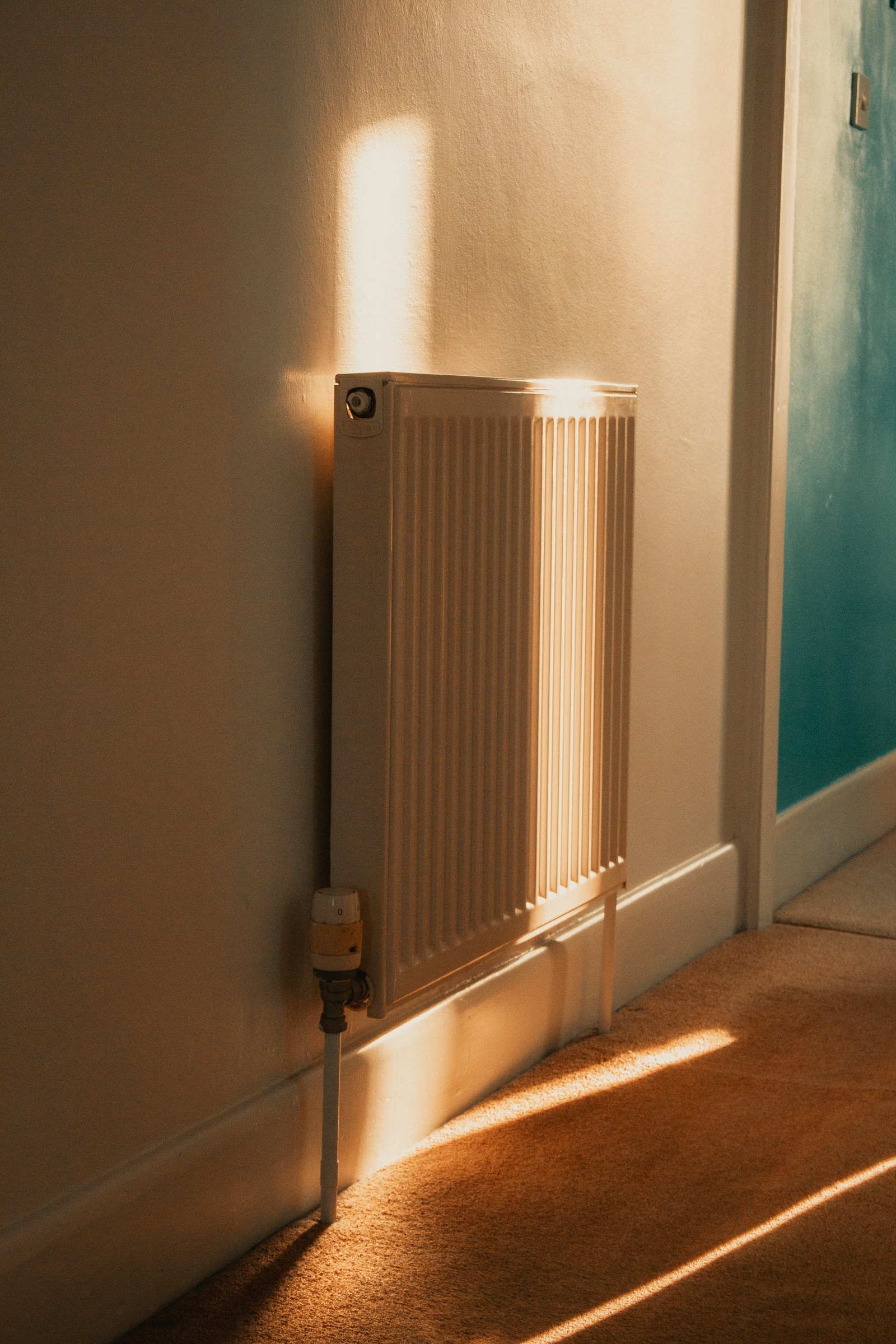
Radiators can trap air, which often leaves the top cold while the lower part warms up. Bleeding a radiator releases that air and can help the heating work more evenly.
Only do this when the heating is off and the radiator has cooled. If you are unsure, if the radiator leaks, or if the boiler pressure is already low, report the issue instead.
Check the symptoms
A radiator that is warm at the bottom but cold at the top often has trapped air. A radiator that is cold at the bottom, or several radiators not heating at all, may point to a different heating issue.
Before bleeding, turn the heating off and wait for the radiator to cool. Keep a cloth and small container ready near the bleed valve.
Bleed the radiator
Fit the radiator key onto the small bleed valve, usually near the top corner. Turn it slowly anti-clockwise until you hear air escaping. You only need a small turn.
When water starts to appear, close the valve by turning it clockwise. Do not remove the bleed screw, and do not leave the valve open while you look for something to catch the water.
Aftercare checks
Wipe the valve dry and turn the heating back on. Check the radiator warms more evenly and look for any drips around the bleed valve.
If the property has a combi boiler, bleeding radiators can lower the pressure. If the pressure drops or the heating stops working, report it or follow the boiler pressure guide only if you are confident it applies to your boiler.